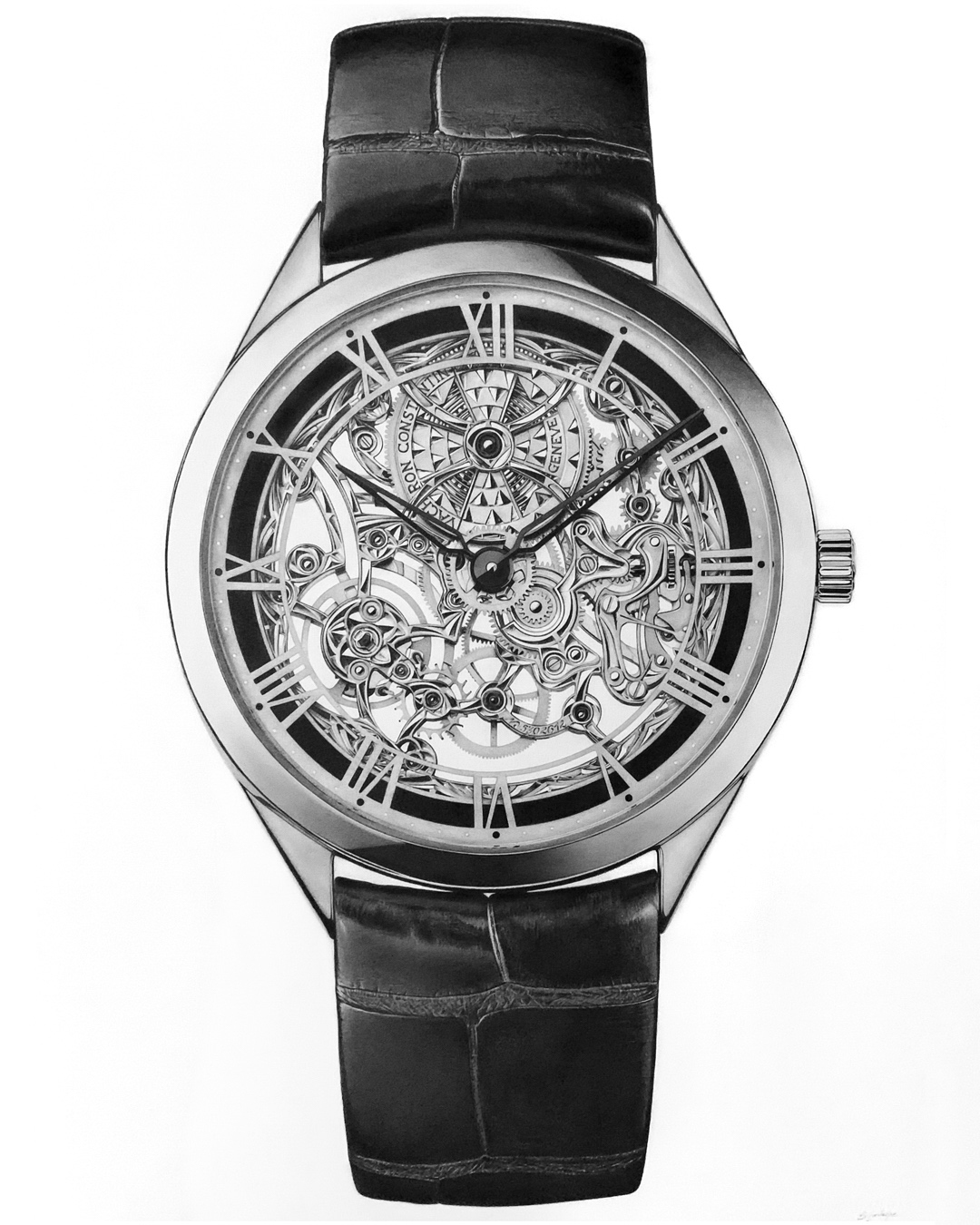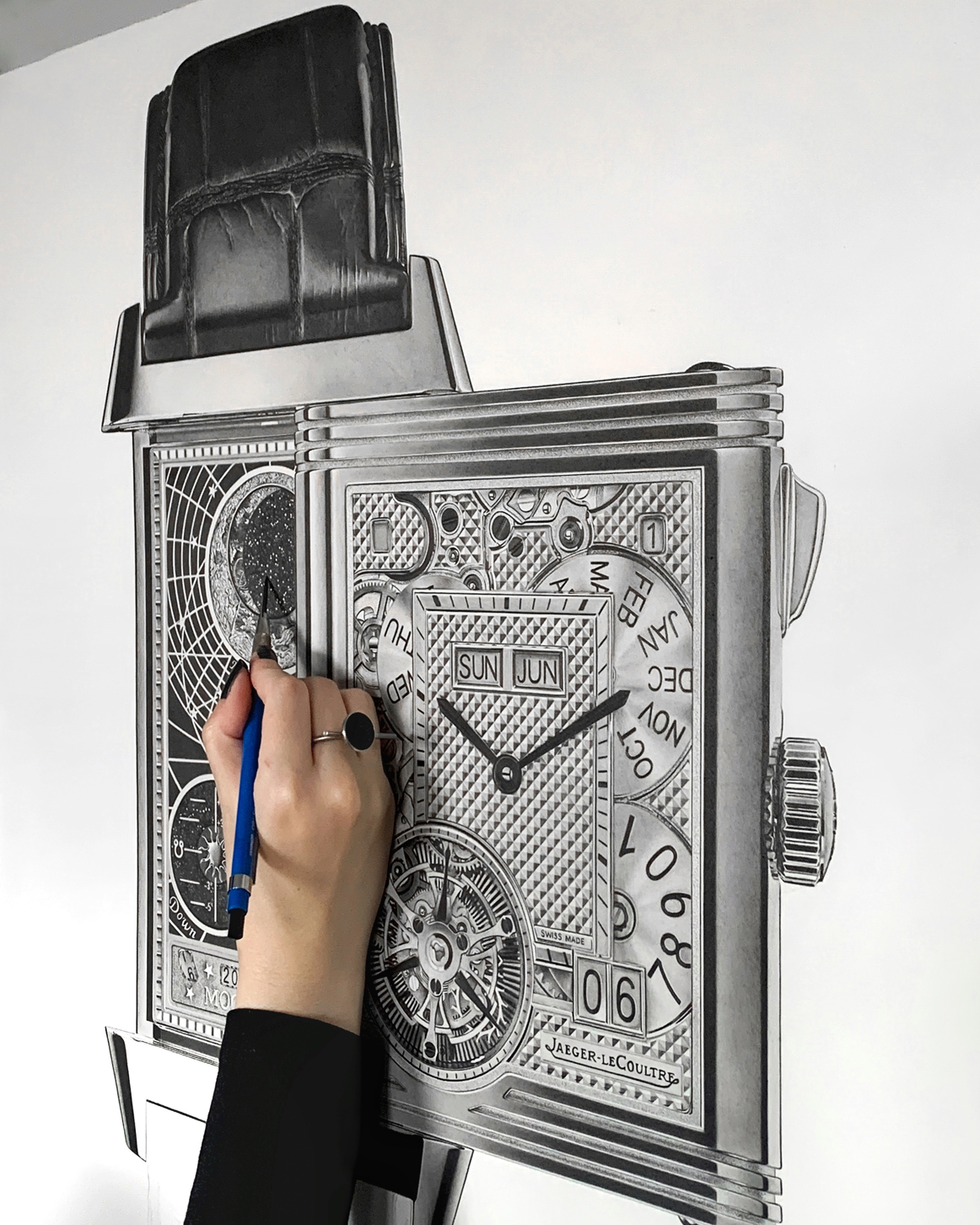
Preserving the Details of the Original Drawing
The goal was never to create a simple copy of the original drawing. I wanted the prints to retain as much of the atmosphere, texture, and precision of the artwork as possible. Making the pieces more accessible for collectors, watch enthusiasts, and people who simply connect with horology and craftsmanship, was also important.
All giclée prints are produced in limited quantities and carefully handled to preserve their quality during the printing and shipping process. Depending on the artwork and format, prints may be shipped flat or rolled in protective archival packaging.
If you’d like to explore available works, you can browse the Watch Giclée Prints collection, discover the Original Watch Drawings behind the prints, or explore the full Hyperrealistic Watch Art Portfolio. I also regularly share close-up details, work-in-progress moments, and studio updates on Instagram as new drawings evolve over time.
Curious About a Particular Print?
If you have questions about sizing, paper types, framing, or available editions, feel free to get in touch. I’m always happy to help collectors find the format that feels right for their space.
What Makes a Giclée Print Different?
Giclée printing is one of the closest ways to preserve the detail, depth, and tonal range of an original drawing in print form. For me, it was important that the reproductions still felt connected to the original artwork. Especially with subjects as detailed as mechanical watches, where small reflections, textures, and movement components matter so much.
Each watch giclée print begins with an original hand-drawn artwork created in graphite and coloured pencil on 100% cotton paper. The drawing is then professionally scanned at high resolution and reproduced using archival pigment-based inks on premium fine art paper designed for long-term preservation.
Unlike standard printing methods, giclée printing allows much finer control over tonal transitions, texture, and depth. This is especially important for graphite work, where subtle shifts in light and contrast can easily disappear through lower-quality reproduction methods.